Ara Panama Sanctuary (REMOSFA project)
Ara Panama Sanctuary is PWC’s newest restoration and private conservation vision in Azuero: a living refuge for Great Green Macaws, endemic birds, rainforest wildlife, and the communities protecting Cerro Hoya’s last forest corridors. Funded through Conserva Aves, a Latin America–wide partnership led by BirdLife International, American Bird Conservancy, RedLAC, and Natura Foundation Panama, the initiative seeks to expand and strengthen networks of protected areas across the Americas
In the mountains of southern Azuero, where the forests of Cerro Hoya rise from the Pacific landscape, Panama Wildlife Conservation is working to protect one of Panama’s most urgent conservation frontiers: the future Ara Panama Sanctuary, part of the REMOSFA project.
This new Restor.eco site is more than a map point. It is a public window into a living restoration effort: a place where forest fragments, private farms, local knowledge, threatened birds, and community leadership can come together to rebuild ecological connectivity around Cerro Hoya National Park.
Azuero is one of Panama’s most culturally iconic regions, but it is also one of the country’s most transformed landscapes. Forest loss, cattle ranching, land clearing, poaching, and fragmentation have pushed wildlife into smaller and more isolated refuges. For species that depend on large trees, connected forests, and quiet nesting areas, every remaining patch matters.
The Great Green Macaw is one of the clearest symbols of this crisis. In Azuero, fewer than 50 Great Green Macaws are believed to remain. These birds need mature forest, nesting cavities, and native food trees to survive. When the forest disappears, so do the nests, the food sources, and the future of the species.
That is why Ara Panama Sanctuary matters.
Google Earth Flyover: Ara Panama Sanctuary and the Azuero Parakeet
Attribution: Google Earth
A sanctuary for the Great Green Macaws
The Ara Panama Sanctuary is envisioned as a protected landscape of privately conserved land in the buffer zone of Cerro Hoya National Park. The broader REMOSFA project — Restauración Ecológica, Monitoreo y Sostenibilidad Financiera para la Conservación de Aves Amenazadas — aims to protect and restore critical habitat for threatened and endemic birds in southern Azuero.
The project focuses on a strategic landscape of private properties that can help connect forest fragments with Cerro Hoya. These lands are not empty spaces. They are feeding areas, nesting areas, restoration zones, and future corridors for wildlife.
By securing conservation agreements, supporting landowners, restoring degraded pastures, planting native trees, and strengthening local monitoring, PWC is building a model where private conservation becomes a practical tool for biodiversity protection.
This is especially important because many of the most valuable habitats around protected areas are outside official park boundaries. National parks are essential, but wildlife does not understand lines on a map. Macaws, parakeets, hummingbirds, monkeys, jaguars, and other species depend on wider landscapes. Protecting the buffer zone strengthens the park itself.
What makes this landscape so special?
The Ara Panama Sanctuary area sits within the Azuero Massif, close to Cerro Hoya National Park, one of the last strongholds for tropical forest biodiversity in the region. The landscape includes lowland humid forest, premontane forest, cloud forest influences, river corridors, pastures, and areas already beginning to regenerate.
This mosaic is important because different species use different layers of the forest. Great Green Macaws need large trees and wide movement corridors. The Azuero Parakeet depends on remaining forest patches. The Glow-throated Hummingbird is tied to highland habitats. The Veraguan Mango represents the unique avifauna of western Panama. The Azuero Spider Monkey depends on connected canopy and healthy forest structure.
When PWC protects this landscape, the work is not only about one species. It is about restoring a functioning ecosystem.
That is the heart of Ara Panama-REMOSFA: conservation that connects science, habitat protection, restoration, community participation, and long-term sustainability.
Great Green Macaw
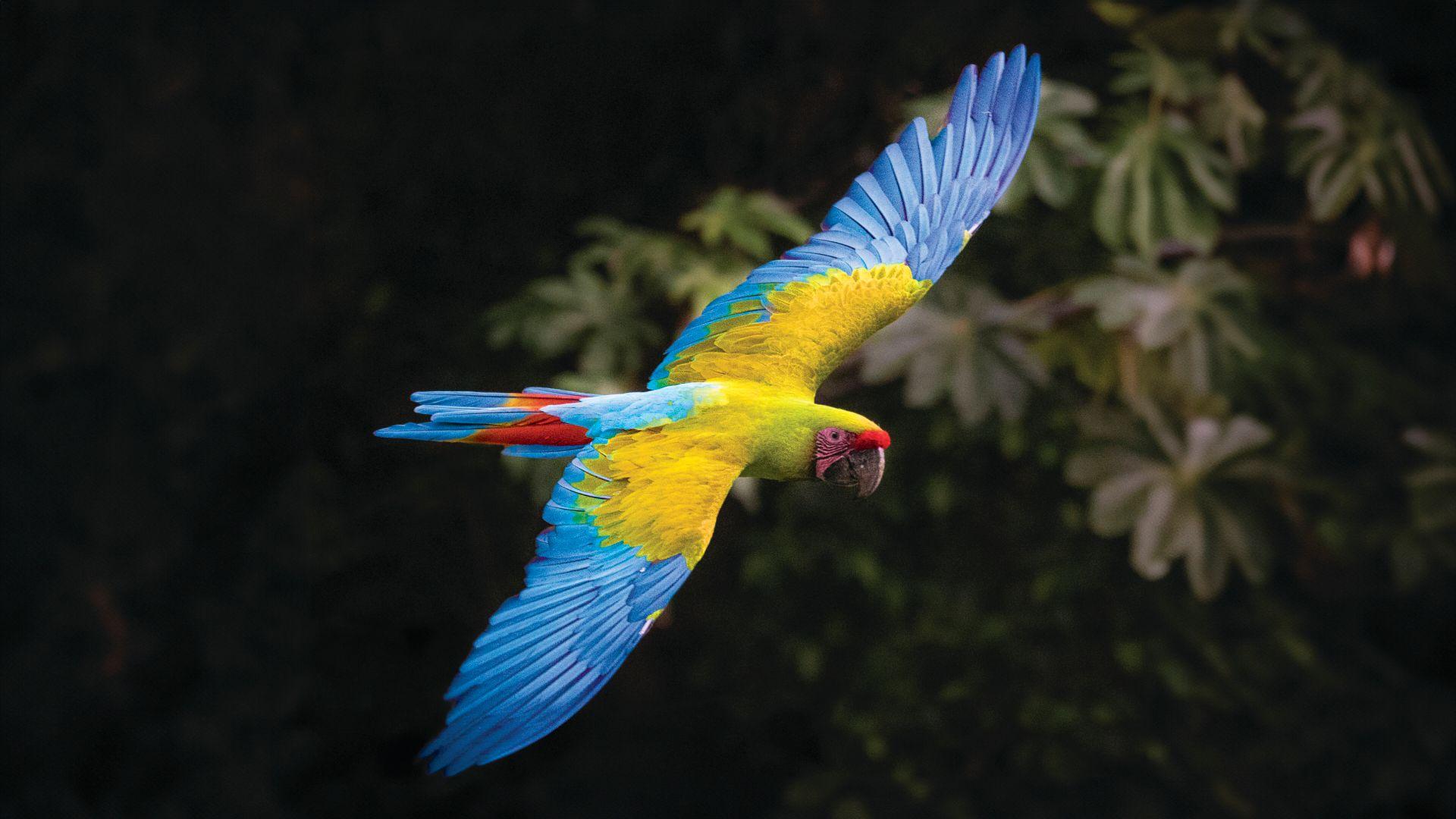
Attribution: Enrique Pucci / Ara Manzanillo
Restoration with the right native trees
Restoring habitat for macaws is not just about planting any tree. It means planting the right trees in the right places.
Great Green Macaws depend on specific native species for food and nesting. In Azuero, PWC’s field teams and local monitors are working to identify the trees used by macaws across the year. This information guides future reforestation so that planted areas become real wildlife habitat, not simply green cover.
Through REMOSFA and Ara Panama, restoration activities will focus on degraded pastures, forest edges, river corridors, and areas where native trees can improve connectivity between forest patches. Community nurseries, local seed collection, and restoration led by women and young people are central to this vision.
Every native tree planted is a future food source, a future nesting opportunity, a future shade corridor, and a future act of hope.
Science, monitoring, and local knowledge
PWC’s work in Azuero is built on field science. Teams have been monitoring macaws, nests, forest species, and wildlife corridors around Cerro Hoya for several years. The project uses biological monitoring, local observations, field expeditions, camera traps, GPS mapping, bird surveys, and community science to understand where conservation action is most urgent.
Local residents are essential to this process. Many of the best wildlife observations come from people who know the land every day: farmers, landowners, guides, students, and community members who see macaws flying over valleys or feeding in old trees.
By involving communities in monitoring, PWC is not only gathering better data. It is creating local guardians for the forest.
A community-led future for conservation in Azuero
Ara Panama Sanctuary is not only about protecting land. It is about creating a future where local people benefit from keeping forests alive.
REMOSFA includes environmental education, local leadership, community nurseries, restoration jobs, birdwatching opportunities, and nature-based tourism. These activities can help create alternatives to destructive land use while strengthening pride in Azuero’s unique wildlife.
For PWC, conservation must be practical. It must work with landowners, schools, youth, women, local authorities, tourism operators, scientists, and international partners. The goal is not to separate people from nature. The goal is to make conservation a shared opportunity.
Why we need your help now
In southern Azuero, the last forest corridors around Cerro Hoya are disappearing piece by piece. When a forest patch is cleared, it is not just trees that are lost. Great Green Macaws lose the old nesting trees they need to raise chicks. Azuero Parakeets and hummingbirds lose feeding areas. Spider monkeys lose the connected canopy they need to move safely. Jaguars and other wildlife are pushed into smaller, more isolated spaces.
For people, the loss is also real. Forests protect water, prevent erosion, store carbon, and support future opportunities for birdwatching, education, research and sustainable tourism. When these forests disappear, Azuero loses part of its natural heritage, its climate resilience and its wild identity.
Fewer than 50 Great Green Macaws are believed to remain in Azuero. Every nesting tree, every native food tree and every remaining forest corridor now matters.
PWC has a clear solution: protect key private lands, restore degraded pastures with native trees, work with local landowners, train community guardians, monitor threatened species and build the Ara Panama Sanctuary as a living refuge for wildlife and people.
But this can only happen if enough people choose to act.
“Donate today to help protect the last forest corridors of Azuero. Your support can help secure land, plant native trees, protect nests, train local guardians and give Panama’s threatened wildlife a safer future.”— Dr. Luis Urena