
Where to See Macaws in Panama: The Macaw Route
Discover Panama’s Macaw Route, a conservation journey through Cerro Hoya, Coiba and Darien in search of the country’s wild macaws. From the critically endangered Great Green Macaw to the iconic Scarlet Macaw, this experience connects responsible birdwatching with direct support for the Ara Panama Project.
If you are wondering where to see macaws in Panama, the best regions include Cerro Hoya, Coiba National Park and Darien...
Panama is one of the most exciting places in Central America to see wild macaws. From the Great Green Macaw near Cerro Hoya National Park to Scarlet Macaws in Coiba and rare macaw species in Darién, the country still holds extraordinary birdlife — but only in fragile pockets of surviving forest.
The Macaw Route by Panama Wildlife Conservation connects responsible birdwatching, community tourism and direct conservation action (learn more about Ara Panama). This is more than a wildlife experience. It is a journey through some of Panama’s most biodiverse landscapes, and a way to support the protection of some of the country’s most threatened birds.
Book your Macaw Route experience and help protect Panama’s macaws.
10% of every booking supports the Ara Panama Project.
Macaw Route at a Glance
- Best for: Birdwatchers, wildlife photographers, conservation travellers and nature lovers
- Key locations: Mariato, Cerro Hoya National Park, Coiba National Park and Darién
- Target species: Great Green, Scarlet, Blue-and-yellow, Red-and-green and Chestnut-fronted Macaws
- Conservation impact: 10% of every booking supports Ara Panama
- Activities: Birdwatching, local guiding, forest walks, coastal landscapes, conservation storytelling and possible native-tree planting
- Why it matters: Panama’s macaws face habitat loss, forest fragmentation, poaching and illegal wildlife trade
Great Green Macaw at Cerro Hoya National Park, Panama

Source: Panama Wildlife Conservation
Why Panama’s Macaws Matter
Five species of macaws have been reported in Panama: the Great Green Macaw, Scarlet Macaw, Blue-and-yellow Macaw, Red-and-green Macaw and Chestnut-fronted Macaw. Globally, some of these species remain relatively widespread, but in Panama their situation is much more serious. Local populations have been reduced by habitat loss, poaching, nest raiding and the illegal pet trade.
Macaws are not only beautiful. They are intelligent, social birds that often form lifelong pairs and can live for decades in the wild. They also play an important ecological role by dispersing seeds across forests. When macaws disappear, the forest loses one of its great gardeners.
The Great Green Macaw is listed as Critically Endangered by the IUCN Red List, largely because of habitat destruction and capture for the cagebird trade. In Azuero, Panama Wildlife Conservation studies indicate that fewer than 50 adult Great Green Macaws may remain, making this one of the most fragile populations in the country.
La Barra, Azuero: Macaw Monitoring Landscape near Cerro Hoya National Park
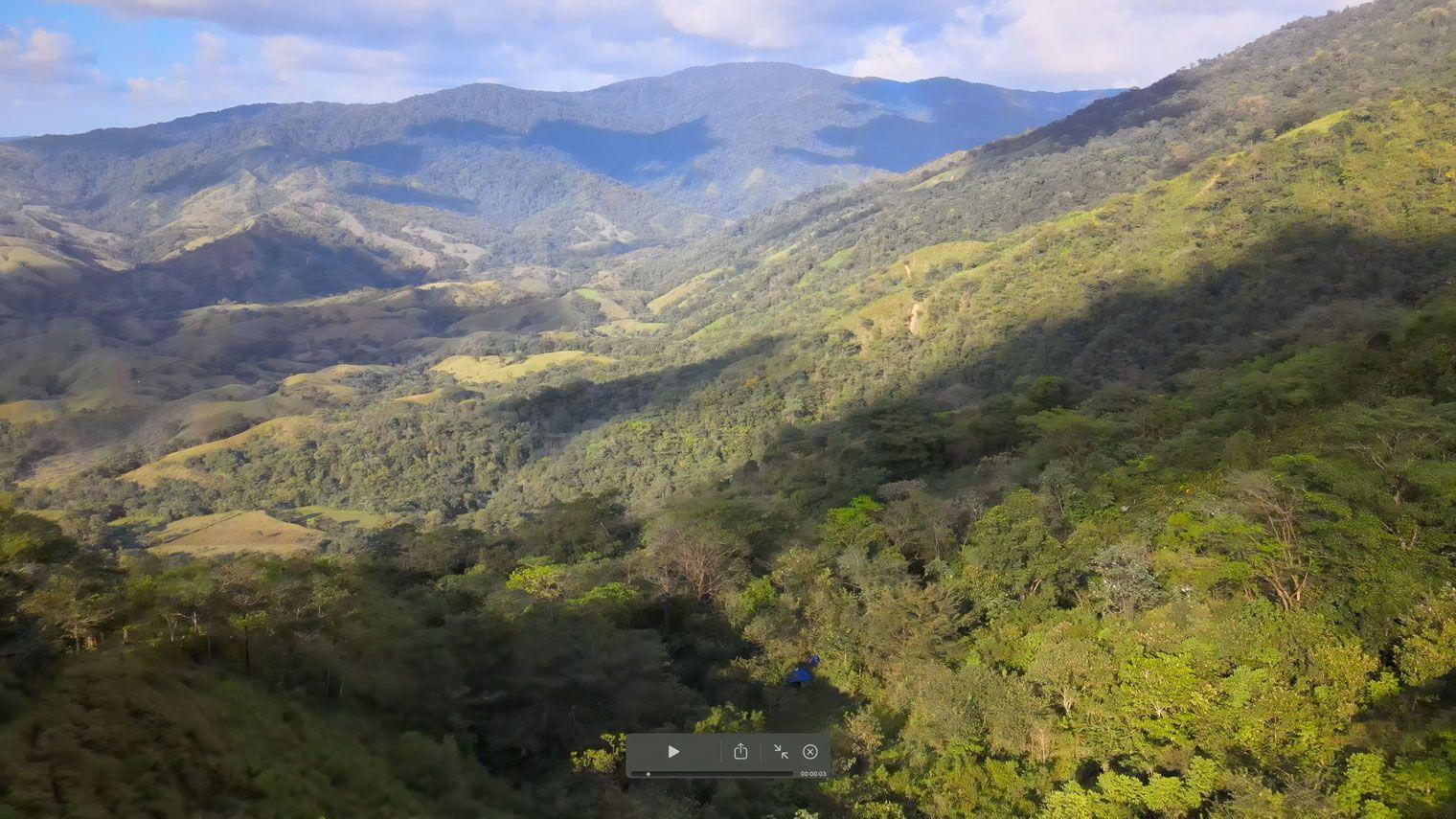
Source: Panama Wildlife Conservation
The Macaw Route in Panama: A Conservation Journey
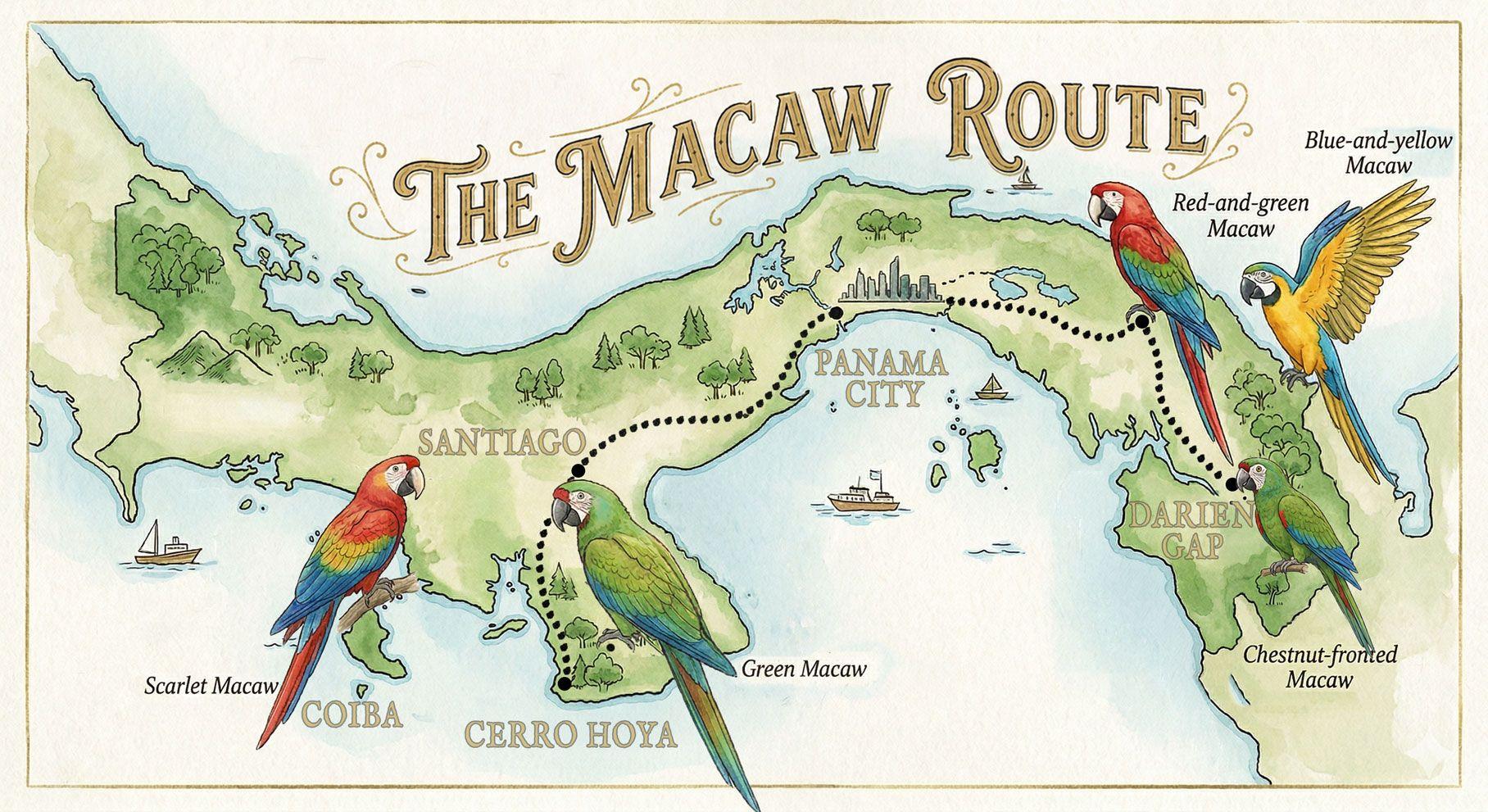
Attribution: Panama Wildlife Conservation
Stop 1: Mariato and Cerro Hoya — Searching for the Great Green Macaw
The journey begins in southern Veraguas, along the green coast of Mariato, also known as the Sunset Coast. Here, nature sets the rhythm. At night, frogs call from the wetlands. At dawn, howler monkeys, toucans and forest birds announce the beginning of the day.
From Mariato, the route moves toward Cerro Hoya National Park, one of the last major forest refuges of the Azuero Massif. This landscape is critical for the Great Green Macaw, a species now facing an extremely high risk of disappearance in Panama.
The road to Cerro Hoya reveals the rural beauty of the peninsula: rice fields, cattle farms, forested mountains and glimpses of the Pacific Ocean. But it also reveals the conservation challenge. Much of Azuero’s forest has been cleared or fragmented, leaving macaws dependent on the last remaining stands of mature trees.
When Great Green Macaws fly above the canopy, the experience is unforgettable. Their calls carry across the forest, and their presence is a reminder that Panama still has the chance to protect this species before it is too late.
These birds depend on native trees such as cuipo, mountain almond, níspero and algarrobo, which provide essential fruits, seeds and nesting opportunities. That is why Panama Wildlife Conservation and local communities are working to restore habitat with native trees that support macaw survival.
Conservation action: When conditions allow, visitors may be invited to plant a native tree, leaving a living contribution to macaw habitat restoration.
Scarlet Macaw in Flight Over Panama’s Tropical Forest
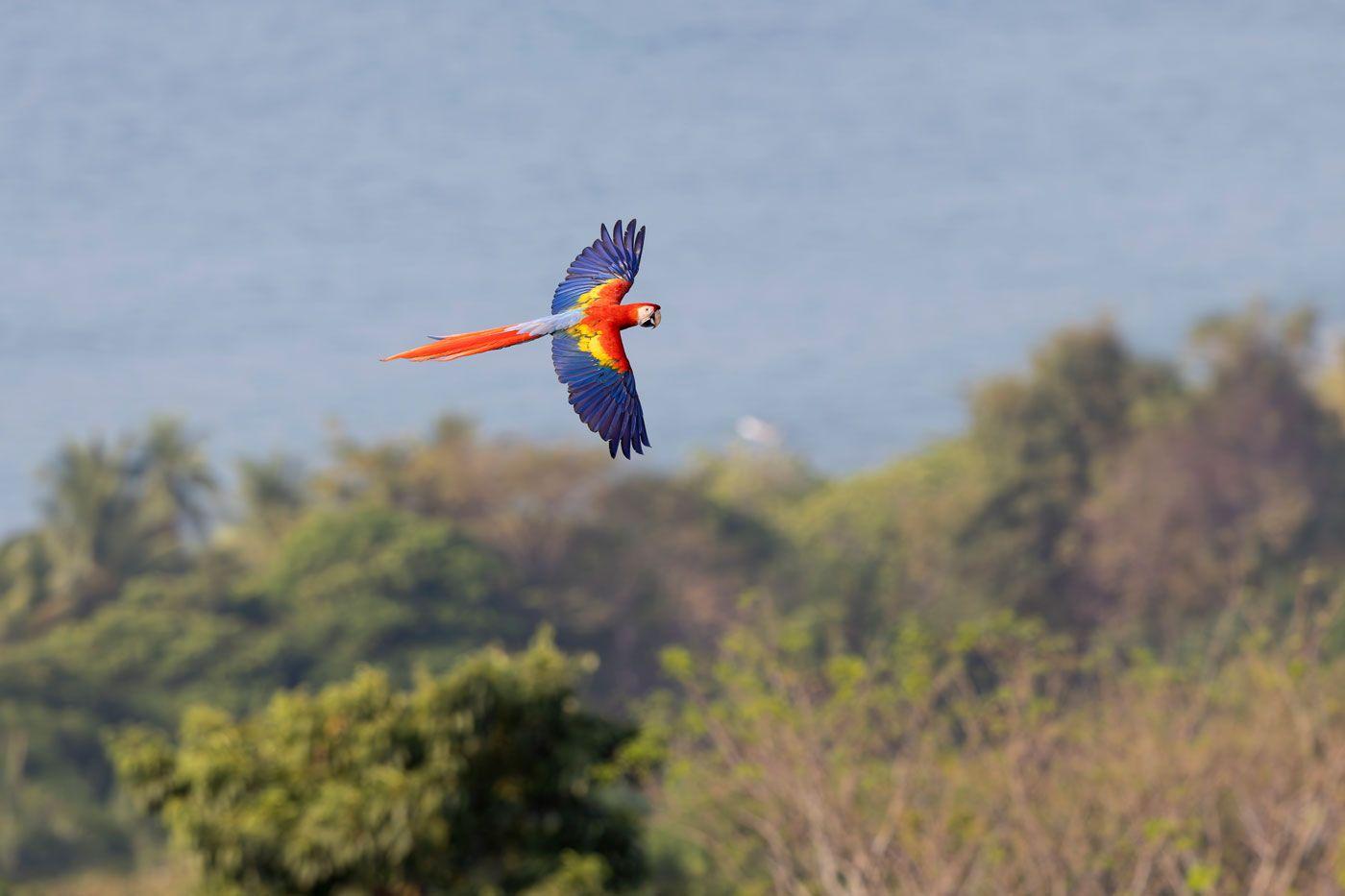
Attribution: Jon Irvine
Stop 2: Coiba National Park — Sanctuary of the Scarlet Macaw
The next stage of the Macaw Route leads to Coiba National Park, one of Panama’s great natural treasures. Coiba protects Coiba Island, 38 smaller islands and surrounding marine areas in the Gulf of Chiriquí, and is recognised by UNESCO for its exceptional biodiversity and high levels of endemism.
At dawn, visitors board a local panga and travel toward the island, watching the horizon for seabirds, dolphins and the deep green outline of Coiba’s forests. These forests are among the last places in Panama where Scarlet Macaws can still be seen in the wild.
Scarlet Macaws are often seen flying in pairs or small flocks, bringing flashes of red, yellow and blue across the canopy and coastal sky. In the original Macaw Route draft, Coiba is described as one of the few remaining wild refuges for Scarlet Macaws in Panama, with an estimated population of 100–200 individuals, although some reports suggest the number may be higher because of the quality of the island’s forest .
For visitors, seeing Scarlet Macaws in Coiba is a privilege. For conservationists, it is also a warning. Their survival on Coiba shows what mature, protected forest can still provide — and what mainland Panama must recover through habitat protection and ecological restoration.
Want your journey to make a difference?
Book the Macaw Route with Panama Wildlife Conservation. 10% of every booking supports Ara Panama’s work to protect macaws, restore habitat and engage local communities.
Red-and-green Macaws Flying Together
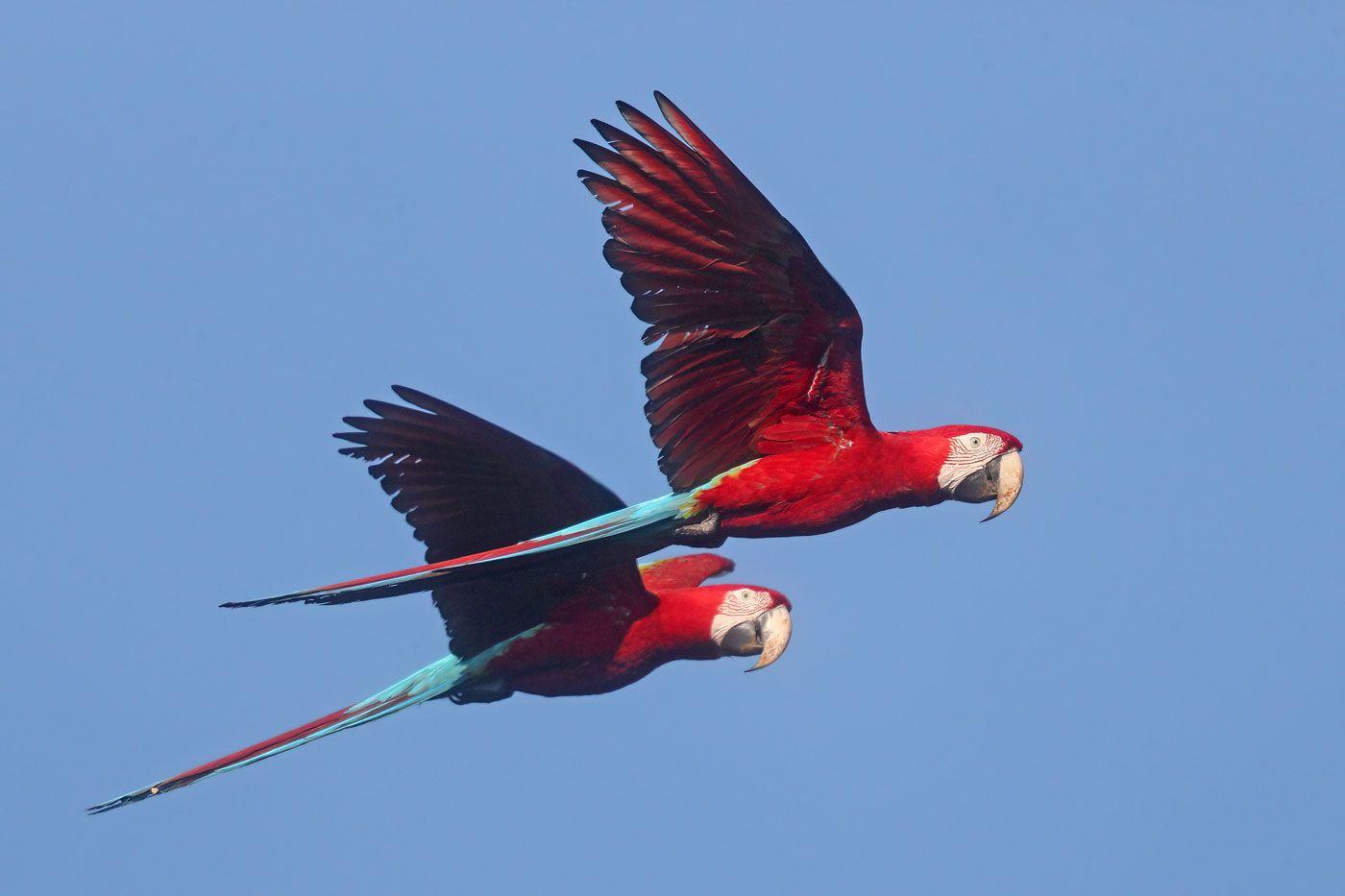
Attribution: Jon Irvine
Stop 3: Darién — The Last Frontier for Rare Macaws
From Coiba, the Macaw Route continues toward Darién, Panama’s most biodiverse province and one of the most important wilderness regions in Central America. Its humid forests, rivers and remote landscapes support some of the most remarkable birdlife in the Americas.
Here, visitors may encounter three additional macaw species: the Blue-and-yellow Macaw, the Red-and-green Macaw and the Chestnut-fronted Macaw.
Blue-and-yellow Macaw
The Blue-and-yellow Macaw is one of the most visually striking birds in the Neotropics, with electric blue wings and a deep yellow chest. In Panama, this species is mainly associated with Darién and areas near Colombia, particularly tropical forests close to rivers.
These macaws are highly social and vocal. They are often heard before they are seen, and watching them move through the forest is one of the great rewards of birdwatching in Darién.
Red-and-green Macaw
The Red-and-green Macaw is larger and more powerful than the Scarlet Macaw. In flight, its deep red body, green wing coverts and blue flight feathers create a dramatic flash of colour above the forest.
In Panama, this species is rare and difficult to see. For expert birdwatchers, an encounter with a Red-and-green Macaw is one of the most memorable possibilities on the route.
Chestnut-fronted Macaw
The Chestnut-fronted Macaw is the smallest of Panama’s macaws. Its green plumage provides excellent camouflage, while the fine black feather lines across its face create a unique pattern.
This species inhabits lowland forests, riverbanks and swampy areas. Like Panama’s other macaws, it is affected by agricultural expansion, cattle ranching and the loss of forest habitat.
How the Macaw Route Supports Conservation?
The Macaw Route is designed to connect tourism with measurable conservation impact. Every booking supports local communities and contributes directly to the Ara Panama Project.
Ara Panama is Panama Wildlife Conservation’s long-term programme to help protect and recover Great Green Macaw populations in Azuero. Its work includes:
- Monitoring wild macaw populations and nesting areas
- Identifying native trees used by macaws
- Planting native trees to restore habitat
- Creating community tree nurseries
- Delivering environmental education in schools
- Training local women through macaw craft workshops
- Promoting conservation through the Green Macaw Festival
Since 2020, Panama Wildlife Conservation has invested in fieldwork, equipment, education and tree planting to launch the first Great Green Macaw conservation programme in Azuero. The organisation has monitored new Great Green Macaw sites, created a conservation booklet for Panamanian children, engaged more than 200 local children, trained 10 women in macaw crafts and launched the first Green Macaw Festival.
Travelers interested in conservation-focused birdwatching experiences in Panama can also collaborate with local ecotourism initiatives and nature lodges that support sustainable travel and biodiversity protection, including Hotel Heliconia Panamá in the Azuero Peninsula and EcoTour Darién, which offers wildlife expeditions in the Darién region.
This is the purpose of the Macaw Route: to make tourism part of the solution.
Chestnut-fronted Macaw Perched in Tropical Forest
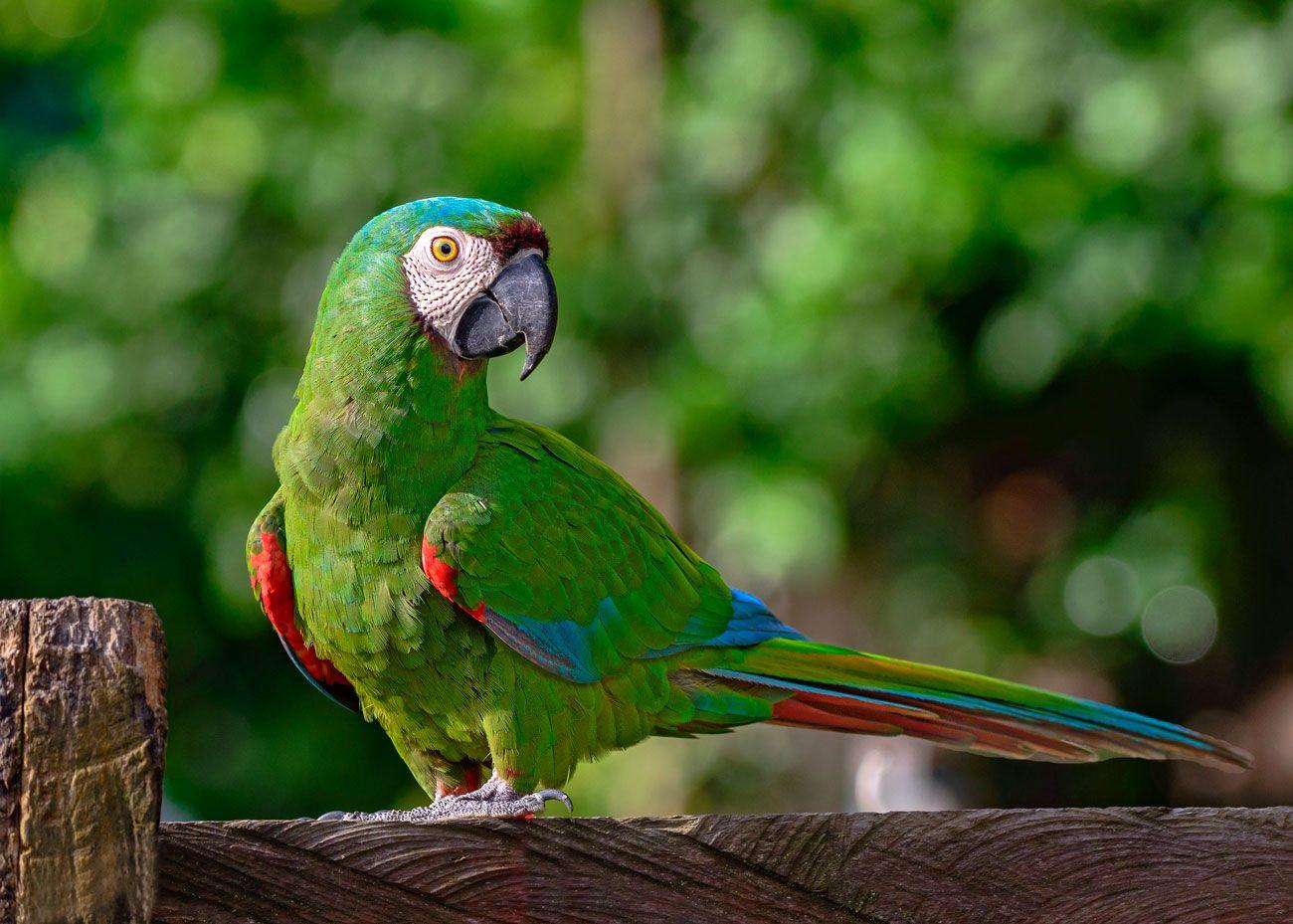
Attribution: Jaime Andres Herrera l Instagram @jaimehv4
Blue-and-yellow Macaws Flying Together
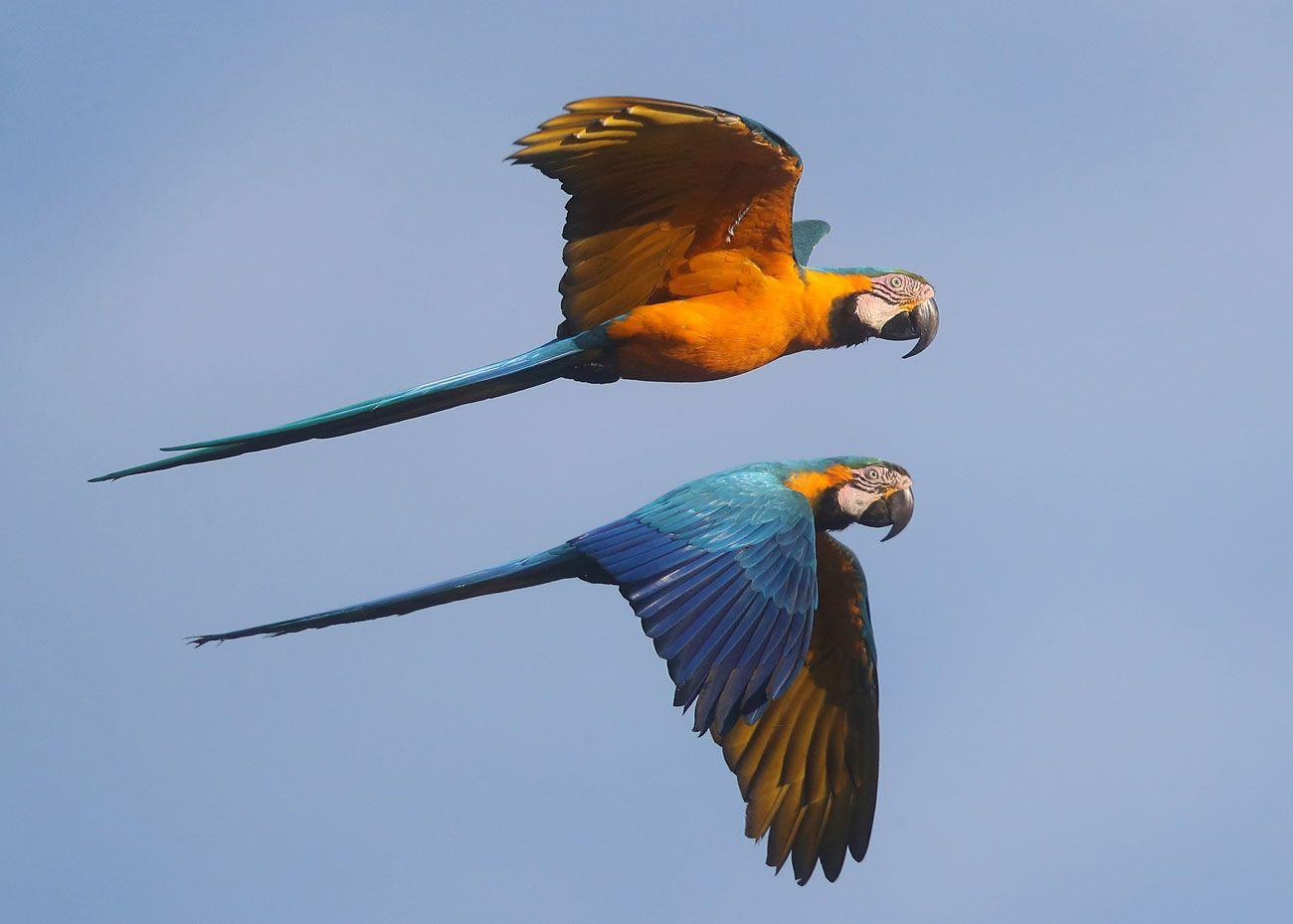
Attribution: Jon Irvine
Responsible Macaw Watching: What Travellers Should Know
Seeing macaws in the wild is never guaranteed. These are free-living birds, and responsible tourism must respect their behaviour, habitat and breeding cycles.
Travellers should always:
- Keep a respectful distance from birds and nests
- Avoid loud noises, playback or disturbance
- Follow local guides and conservation staff
- Never buy wildlife or wildlife products
- Support local communities and conservation initiatives
- Choose experiences that invest directly in habitat protection
A responsible macaw encounter is not about getting closer at any cost. It is about seeing these birds in a way that helps them remain wild.
Why Travel with Panama Wildlife Conservation?
Panama Wildlife Conservation is a charity of scientists and conservationists dedicated to protecting Panama’s biodiversity through research, habitat conservation, education and community engagement. The organisation works to protect endangered species while supporting the local communities who live alongside them.
Through Ara Panama, PWC is building a long-term roadmap for Great Green Macaw recovery in Azuero. The programme combines field science, education, community participation, native-tree restoration and future recovery planning for one of Panama’s most threatened birds .
When you travel with Panama Wildlife Conservation and its partners, your experience supports more than a single trip. It helps fund the people, forests and community actions that macaws need to survive.
By joining our expeditions or supporting our work, you contribute to long-term conservation efforts in the Azuero Peninsula and Cerro Hoya National Park.
💚 Support Great Green Macaw conservation by making a donation through our donation page.
Book the Macaw Route
Panama’s macaws are symbols of colour, intelligence and wilderness. But they are also symbols of urgency. Their survival depends on the protection of forests, the restoration of native trees and the support of people who believe that tourism can help conserve nature.
By booking the Macaw Route, you help protect the future of these extraordinary birds.
Book your Macaw Route experience today.
10% of every booking supports the Ara Panama Project.
Ask us about private, group or conservation-focused trips
FAQ: Seeing Macaws in Panama
Can you see wild macaws in Panama?
Yes. Wild macaws can still be seen in Panama, especially in places such as Cerro Hoya, Coiba and Darién. Sightings are never guaranteed, but these areas are among the best places to look for them responsibly.
Where is the best place to see Great Green Macaws in Panama?
One of the most accessible areas for Great Green Macaws in Panama is the Azuero region around Cerro Hoya National Park. Panama Wildlife Conservation has identified this area as critical for the species’ survival in Azuero.
Where can I see Scarlet Macaws in Panama?
Coiba National Park is one of the best places in Panama to see Scarlet Macaws in the wild. The island’s protected forests provide one of the country’s last strong refuges for the species.
Is the Macaw Route suitable for photographers?
Yes. The Macaw Route is suitable for wildlife photographers, birdwatchers and conservation travellers. However, photography must be done responsibly, without disturbing birds, nests or sensitive habitats.
How does my booking support conservation?
10% of every Macaw Route booking is invested in the Ara Panama Project, supporting macaw monitoring, native-tree restoration, environmental education and community conservation work.
“Cerro Hoya National Park: One of the Best Places to See Macaws in Panama”— Luis Ureña